Memodyne Nootropic Formula: 5 Steps to Compare Label and Research
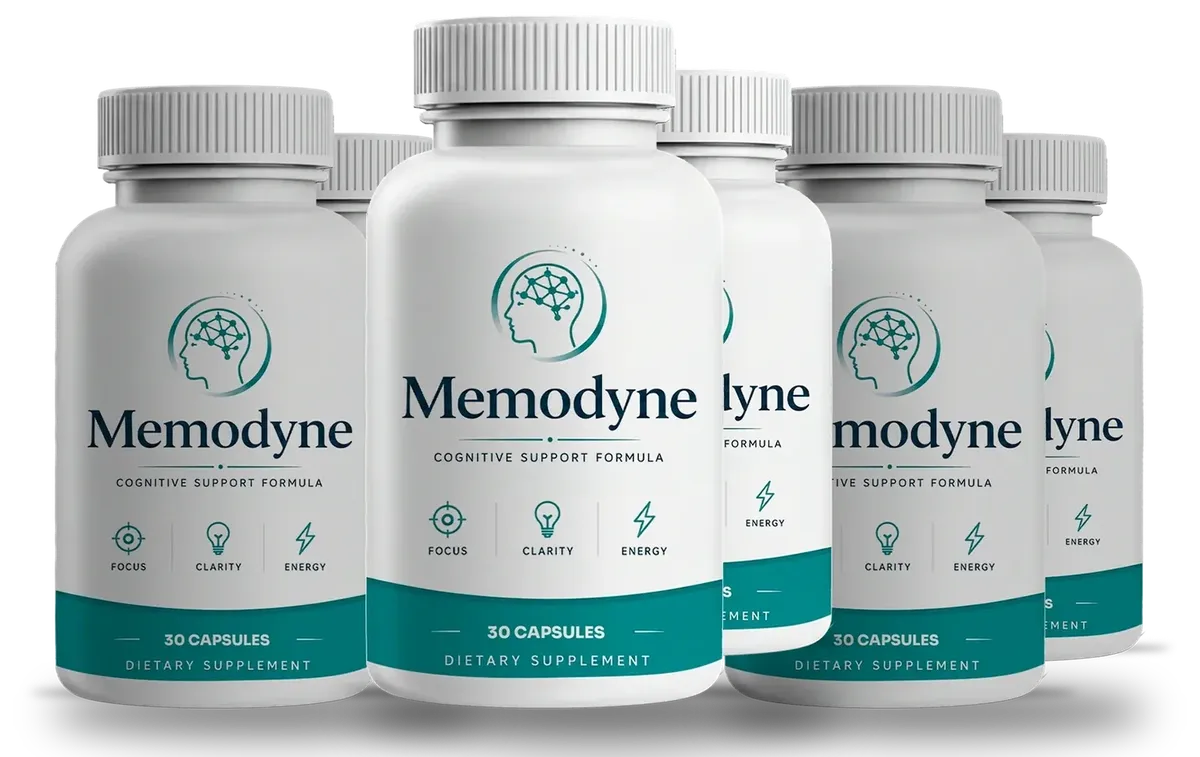
Quick answer“Nootropic” is a search word, not a label word. Memodyne's label says Cognitive Support Formula and lists seven lines: arginine, citrulline, beta-alanine, niacin and calcium. Five steps set each line beside the research. The doses are small, and no study of the product exists.
What are the key facts about the Memodyne formula?
Key facts
- The front label names the mix “Cognitive Support Formula*”. It does not use the word nootropic.
- Seven lines are printed, each with an amount: arginine 200 mg and arginine AKG 200 mg, citrulline HCl 100 mg and citrulline malate 100 mg, beta alanine 40 mg, niacin 7.5 mg NE and calcium 18 mg.
- The five amino acid lines add up to 640 mg a capsule. Part of each salt form's weight is its carrier, not the amino acid.
- The label lists no caffeine and no herbs. It has no proprietary blend.
- The ingredients are better known for blood flow and for workouts than for memory.
- Nobody has published a study of Memodyne. The research we cite tested single ingredients, mostly at gram doses.
What does “nootropic” mean on a supplement page?
It is a loose word. Sellers and search engines use it for anything sold to help thinking. It carries no test and no standard. A product can wear the word and have no study behind it.
So we set the word aside and read the label instead. Memodyne's front panel says “Cognitive Support Formula*”, with icons for focus, clarity and energy. The asterisk points to the FDA statement, which says those words were not evaluated by the FDA. Everything below starts from what is printed, not from what a keyword suggests.
What are the 5 steps?
- 01
Read the name and the asterisk
The claim is a label name, and the label says it was not evaluated.
- 02
List the seven lines
Write each amount in milligrams.
- 03
Set each line beside the research
Find the dose the studies used.
- 04
Note what is absent
No caffeine, no herbs, no hidden blend.
- 05
Decide what evidence you need
Match your standard to what exists.
What do the supplement facts list?
| Label line | Amount | What it is |
|---|---|---|
| Niacin | 7.5 mg NE | Vitamin B3, 47% of the Daily Value |
| Calcium (as calcium carbonate) | 18 mg | A trace of mineral, 1.5% of the Daily Value |
| L-arginine (base) | 200 mg | Free-form amino acid |
| L-arginine AKG 2:1 extract | 200 mg | Arginine joined to a carrier called alpha-ketoglutarate |
| L-citrulline HCl | 100 mg | Citrulline in a hydrochloride salt form |
| L-citrulline malate | 100 mg | Citrulline joined to malic acid |
| Beta alanine | 40 mg | A sports amino acid |
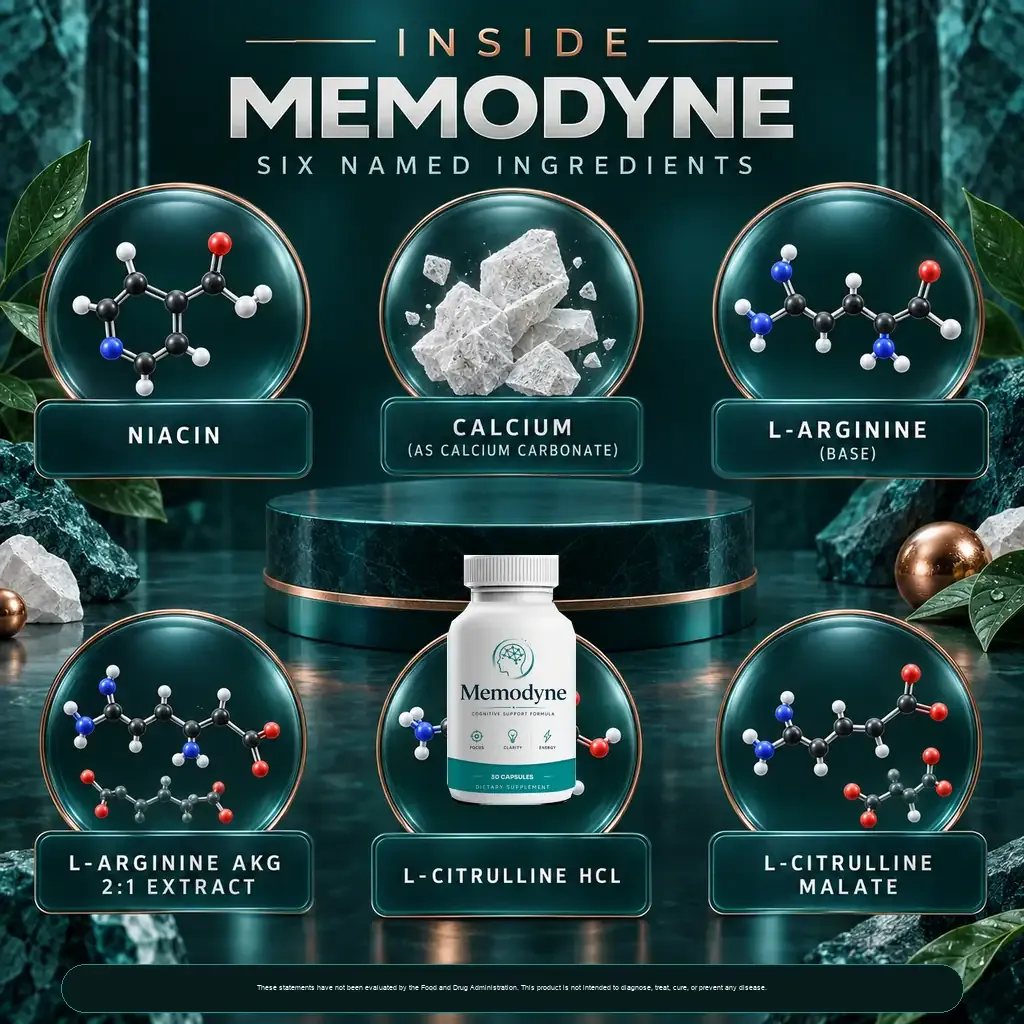
Add the five amino acid lines and you get 640 mg. Arginine accounts for 400 mg across two forms. Citrulline adds 200 mg across two forms. The brand's own “Inside” graphic names only six items and leaves out beta-alanine. The printed label includes it, and the label wins.
What is the idea behind the formula?
It is a blood-flow idea. The body uses arginine to make nitric oxide, which relaxes blood vessels. It turns citrulline into arginine, mostly in the kidneys. Healthy volunteers who took citrulline by mouth ended up with more blood arginine than those who took the same amount of arginine (Schwedhelm et al., 2008).
Blood flow matters to the brain, and that is the thinking behind the pairing. But an idea is not a result. The question for a buyer is what happens at this dose, in a person like you, and nobody has measured that.
What did the studies actually test?
| Study | Who | Dose | What was measured |
|---|---|---|---|
| Small arginine memory trial (Mone et al., 2022) | 72 frail older adults with high blood pressure | 1.66 g twice a day for 4 weeks | Thinking-test scores; single-blind and short |
| Arginine and blood pressure review (Dong et al., 2011) | 11 trials, 387 people | 4 to 24 g a day | Systolic about 5 mmHg and diastolic about 3 mmHg lower than placebo |
| Arginine and citrulline review (Khalaf et al., 2019) | Several trials | Gram doses | Blood pressure; results mixed |
| Arginine AKG in trained men (Campbell et al., 2006) | Trained adult men | 12 g a day for 8 weeks | Some strength and power measures |
| Beta-alanine position stand (Trexler et al., ISSN 2015) | Athletes | 4 to 6 g a day for at least 2 weeks | Muscle carnosine |
Read the “what was measured” column. Only the first row looks at thinking, and it is small. The rest are about blood pressure and sport. That is why we call these ingredients better known for blood flow and workouts.
How big is the dose gap?
- 12%of the memory-trial arginine dose
- 1%of a 4 g beta-alanine dose
- Halfof an adult's daily niacin need
- Under 2%of an adult's daily calcium need
These shares come from comparing the label with the sources. A small share does not prove nothing happens. It leaves the studies silent on this dose. The one line that comes close to a full dose is niacin, and niacin is a vitamin, not a thinking aid.
What is missing from the label?
What the label does not list
- No caffeine or other stimulant.
- No herbs or plant extracts.
- No proprietary blend that hides amounts.
- No sugar, gelatin or dyes.
- No lab certificate. A reference number exists in our files, but no certificate we can read has been published.
That shortlist matters for two reasons. If you are sensitive to caffeine, you will see none here. And a product with fewer moving parts is easier to check line by line.
What level of evidence do you need?
Only you can answer that. Some buyers are content to try a clearly labeled capsule for 60 days and judge for themselves. Others want a trial first. If you are in the second group, Memodyne cannot meet that need today.
Whatever you choose, remember the bigger picture. A federal health agency says direct evidence that supplements prevent dementia is lacking (NCCIH, Supplements for cognitive function). Habits with research behind them include regular sleep, movement on most days, blood pressure kept in range, a hearing check and time with friends. A doctor can also check vitamin B12 and review your medicines (NIA, Memory problems and aging).
Who should ask a doctor before trying the formula?
Anyone on blood pressure medicine, nitrates such as nitroglycerin, or ED pills, because arginine and citrulline may add to their effect (Mayo Clinic, L-arginine) (WebMD, L-citrulline). Anyone who has had a heart attack, because arginine gave no benefit and more deaths occurred in the arginine group in one trial (Schulman et al., JAMA 2006). And anyone pregnant, nursing, under 18 or living with a known medical condition.
Not a treatment
Memodyne is a dietary supplement, and no FDA approval exists for it or for any supplement. It does not treat memory loss, dementia or Alzheimer's disease.
Frequently asked questions
Is Memodyne a nootropic?
The label does not use that word. It calls Memodyne a “Cognitive Support Formula*”, and the asterisk points to the FDA statement that those words were not evaluated.
What does the Memodyne formula contain?
Seven lines: L-arginine 200 mg, L-arginine AKG 200 mg, L-citrulline HCl 100 mg, L-citrulline malate 100 mg, beta alanine 40 mg, niacin 7.5 mg NE and calcium 18 mg.
Does the formula have caffeine or herbs?
The label lists no caffeine and no herbs. The other ingredients are the capsule shell, vegetable stearate and silicon dioxide.
What research backs the Memodyne formula?
Research tested single ingredients, mostly arginine and citrulline for blood pressure at gram doses. Nobody has published a study of Memodyne itself.
How do the doses compare with the research?
The arginine is about 12% of the memory-trial dose and the beta-alanine about 1% of a 4 g sports dose. Niacin is about half a day's need and calcium under 2%.
Is the Memodyne formula FDA approved?
No. The FDA does not approve dietary supplements before they are sold, and Memodyne is not a treatment for memory loss.
Our view
Our view is that the formula is simple, open and untested. A short list of familiar amino acids, a vitamin and a trace of calcium, each with a printed amount, is easy to read. It is also easy to see that the amounts sit far below the doses researchers used.
Call it a nootropic if you like, but do not let the word do the work of evidence. Judge the capsule by the label, by your doctor's view and by your own notes inside the 60-day window.
Last updated
Read the formula? Then see the label and the packs
Seven printed lines, a vegetable capsule and a 60-day money-back window on the sales page. Raise any medicine questions with your doctor before you order.
We earn money when you buy through our links. The price you see at checkout is the one that counts.