
Memodyne Benefits: What the Cognitive Support Formula Offers
Quick answerMemodyne is sold as a Cognitive Support Formula, with focus, clarity and energy icons on the label.
In daily use it offers a clear label, a once-a-day routine and about half a day's niacin. Habits like sleep, activity and hearing care also matter for memory.
- 60-day satisfaction window
- Free US shipping on 3 and 6 bottles
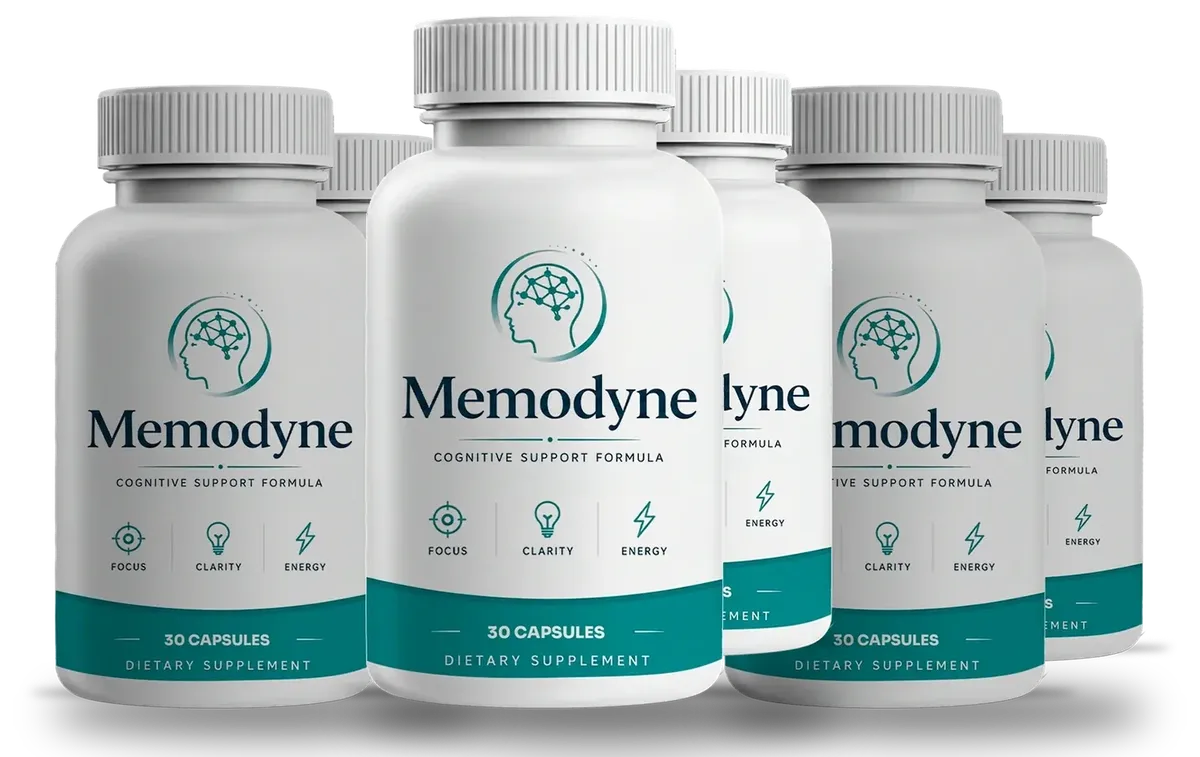
What benefits does the label claim?
The front of the bottle says three things. It reads “Cognitive Support Formula*”, and it shows three icons: FOCUS, CLARITY and ENERGY. The asterisk sends you to the FDA statement on the same label, which says these words were not evaluated by the FDA.
The sales page goes further, with phrases about memory and brain cells. This page puts every claim next to what has actually been shown. We sell Memodyne, so we think you deserve the plain version.
Cognitive Support Formula
The label's name for the mix. No study of the product backs it.
Focus
An icon on the front label. Not a test result.
Clarity
An icon on the front label. Not measured in any trial.
Energy
An icon. Niacin helps cells use food for energy, a different thing from feeling alert.
Which claims hold up and which do not?
We sorted each claim into three groups. Shown means good evidence exists for that point. Possible means a plausible link that has not been tested at this dose. Not shown means we found no support.
| Claim | Where it appears | Status | Why |
|---|---|---|---|
| Clearly labeled, no hidden blend | Label | Shown | Every one of the seven lines has its own printed amount |
| Once-a-day routine | Label directions | Shown | One capsule daily with 8 oz of water |
| Supplies niacin | Label | Shown | 7.5 mg NE, about half a day's need (NIH ODS, Niacin) |
| Supports blood flow | Formula idea | Possible | Arginine lowered blood pressure at 4 to 24 g a day (Dong et al., 2011); 400 mg was not tested |
| Cognitive support | Front label | Not shown | One small trial used about 8 times more arginine (Mone et al., 2022) |
| Focus, clarity, energy | Front label icons | Not shown | No product data; icons are marketing |
| “Enhance memory function” | Sales page | Not shown | No study of the product exists |
| “Protect the brain from oxidative stress” | Sales page | Not shown | No evidence for this capsule |
| “Boost neural communication” | Sales page | Not shown | No evidence for this capsule |
What are the real, practical upsides of Memodyne?
Some benefits are not about the brain at all, but they are still worth naming. They are the things you can check yourself. Each line is explained on our ingredients page, and the vitamin line has its own niacin page.
What works in its favor
- Every line has its own amount, so you know what you swallow
- One capsule a day is easy to fit into a routine
- Vegetable capsule (hypromellose)
- About half a day's niacin, below the flushing range
- A 60-day money-back window shown on the sales page
What to weigh first
- No study of Memodyne has been published
- Amino acid doses are small next to the research
- May add to blood pressure drugs, nitrates and ED pills (see side effects)
- Refund terms mention at least 30 days of use
- Not a treatment for memory loss or dementia
Honest note: why we make no memory claim
Because nobody has shown it. No trial of Memodyne exists, and no review shows that arginine or citrulline help memory in healthy people. The closest study was small, short and single-blind, in frail older adults with high blood pressure, at 3.3 g of arginine a day (Mone et al., 2022).
Supplements are also not proven to prevent dementia (NCCIH, Supplements for cognitive function), and the FDA does not approve them before sale (FDA, Q&A on Dietary Supplements). The FTC expects health claims to rest on solid science (FTC, Health Products Compliance Guidance). We hold this site to the same rule. The mechanism is explained on our how it works page.
What habits matter most for memory?

The habits with the strongest research are free or close to it. They also help your heart, which matters for the brain.
Reading, puzzles, learning a song or a new route all keep the mind busy. None of these needs a pill, and you can start most of them today.
Illustration: a woman reading in a library. Stock photo, not a customer.
- 01
Get a full night's sleep
Deep sleep helps the brain store what you learned during the day. Snoring with pauses in breathing is worth a doctor visit.
- 02
Move most days
Brisk walking, swimming or dancing gets the heart pumping. Activity helps blood pressure, mood and sleep too.
- 03
Keep blood pressure in range
High blood pressure harms small vessels in the brain. Check it, and take prescribed pills as directed.
- 04
Look after your hearing
Hearing loss makes the brain work harder and can cut you off from people. A hearing test is simple.
- 05
Stay in touch with people
Talking, laughing and sharing plans keep the mind engaged. Clubs, classes and volunteering all count.
- 06
Ask about B12 and your medicines
Low vitamin B12 and some medicines can cause memory trouble. Both are easy for a doctor to check and often fixable.
When is forgetfulness a reason to see a doctor?
Some forgetfulness is a normal part of aging, like losing your keys now and then (NIA, Memory problems and aging). Memory loss that disrupts daily life is different and should be checked (Alzheimer's Association, 10 warning signs). Several causes can be treated.
| Usually normal | Worth a doctor visit |
|---|---|
| Forgetting a name, then recalling it later | Asking the same question again and again |
| Missing a monthly payment once | Trouble keeping track of bills you have paid for years |
| Losing your glasses now and then | Putting things in odd places and being unable to retrace steps |
| Needing help with a new phone setting | Getting lost on a familiar route |
Call 911 for sudden symptoms
Sudden confusion, trouble speaking, face drooping or numbness on one side can be a stroke. Call 911 and note the time (CDC, Stroke signs).
Who might reasonably try Memodyne?
An adult who wants a simple, clearly labeled capsule, accepts that it is untested, and has checked with a doctor if they take heart or blood pressure medicine. It is not a fit for anyone hoping to treat memory loss. Our who it is for page has a short checklist, and the results timeline explains why no timeline can be promised.
A quick self-check
- You are 18 or older
- You do not take nitrates, ED pills or blood pressure drugs, or your doctor has said yes
- You have not had a heart attack, or your cardiologist has said yes
- Your memory changes are mild and have been checked when needed
- You plan to keep up sleep, activity and other habits as well
Memodyne benefits FAQ: questions people ask
What are the benefits of Memodyne?
The clear ones are practical: a clearly labeled capsule, one a day, with about half a day's niacin. Memory, focus and clarity benefits have not been tested in the product.
Does Memodyne improve memory?
That has not been shown. No study of Memodyne exists, and no review shows its amino acids help memory in healthy people.
Does Memodyne help with focus and energy?
The front label shows focus, clarity and energy icons, but they are marketing, not test results. Niacin helps cells use food for energy, which is not the same as feeling more alert.
Can Memodyne prevent dementia or Alzheimer's?
No. It is a dietary supplement, not a treatment, and health agencies say direct evidence that supplements prevent dementia is lacking.
Is Memodyne good for blood pressure?
It is not sold for blood pressure. Arginine lowered blood pressure a little in trials at 4 to 24 g a day, far more than the 400 mg in a capsule.
What really helps memory as you age?
Good sleep, regular activity, blood pressure control, hearing care, social contact and staying mentally active all have research behind them. A doctor can also check B12 and your medicines.
Is Memodyne worth it?
It depends on what you expect. If you want a tested memory product, it is not that; if you want a simple labeled capsule and accept the evidence gap, the 60-day window lets you judge.
How long before Memodyne benefits show?
There is no tested timeline because no trial of the product exists. If you try it, keep a short log and decide inside the 60-day window.
Are Memodyne claims approved by the FDA?
No. The FDA does not approve supplements, and the label's own asterisk says the claims were not evaluated by the FDA.
Ready to try Memodyne?
One capsule a day, 30 per bottle, from $49 a bottle on the 6-bottle pack, with a 60-day money-back window shown on the sales page. Take blood pressure or heart medicine? Ask your doctor first.
Why does social contact matter so much?
Conversation is a workout for the brain. You listen, recall names, follow a story and answer in real time.
Loneliness is linked to worse health in older adults, including thinking problems. A weekly phone call, a walking group or time in a community garden can make a real difference to your week.
Illustration: a man laughing in a garden. Stock photo, not a customer.