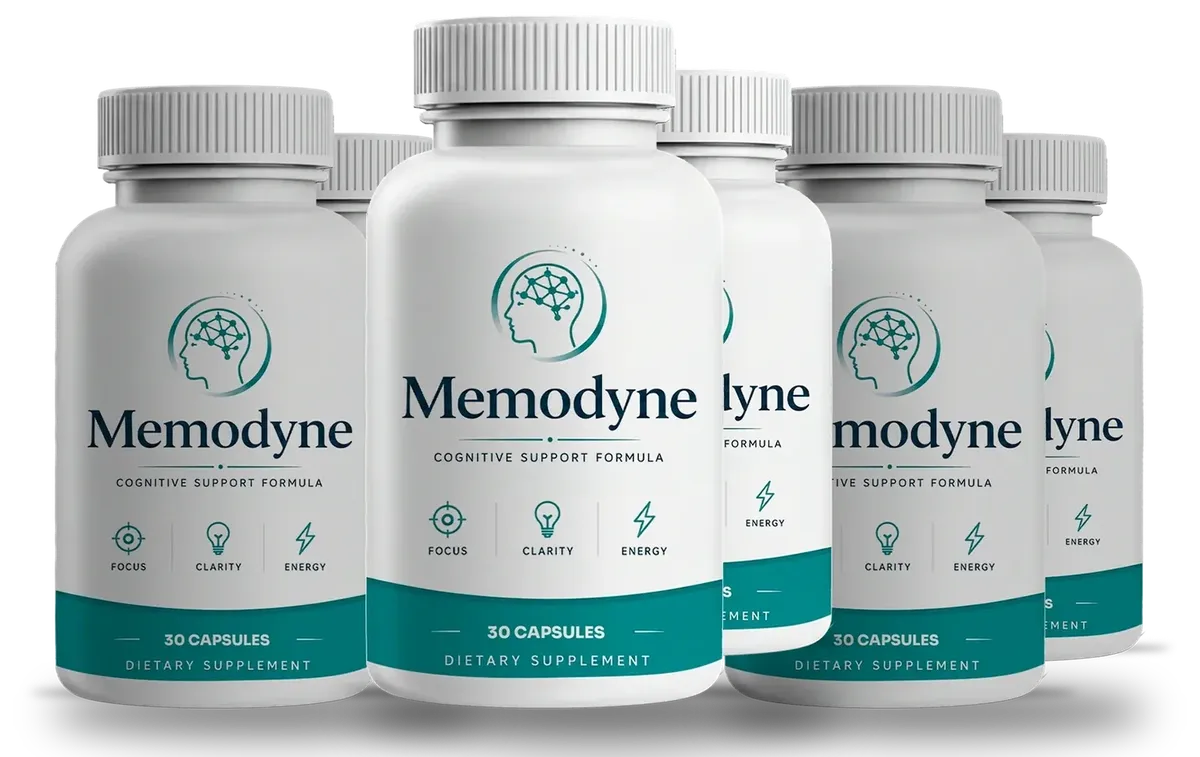
Choosing a Memory Supplement: The Memodyne Buyer's Checklist
Quick answerAsk six questions before you buy any memory supplement. Are all amounts printed? Is anything hidden in a blend? Do the doses match the studies? Could it clash with your medicines? Are the refund terms clear? Is the website the right one? Applied to Memodyne, the label passes the first two, the doses fall well short of studies, and blood pressure medicine needs a doctor's OK.
- 60-day satisfaction window
- Free US shipping on 3 and 6 bottles

Why read the label before the ad?
Six questions, about ten minutes, any product.
Memory supplements are sold with big words and small print. The small print is where the useful facts live. This checklist turns that print into six questions you can answer in about ten minutes.
We sell Memodyne, so we test it against the same six questions below and show every answer. You can use the checklist on any product, including ones we do not sell.
Before the checklist
A checklist helps you compare products. It does not replace a doctor. If memory loss is new, getting worse or affecting daily life, book a visit before you buy anything. Some causes, like low B12 or a medicine side effect, can be treated (NIA, Memory problems and aging). Our brain health basics guide explains what to ask.
The six questions at a glance
1. Are all the amounts printed?
Supplement labels must list each dietary ingredient with its amount per serving (21 CFR 101.36). Ingredients with no Daily Value get a symbol instead of a percentage. If a label shows names but no numbers, you cannot judge it.
Memodyne: passes. The label lists seven lines, each with its own amount. Note that the brand's own text names only six; the label adds beta-alanine at 40 mg. The label is the version that counts.
2. Is anything hidden in a blend?
A proprietary blend gives one total, such as “Brain Blend 500 mg” (a made-up example), and lists names under it. The maker can put most of the weight in the cheapest item. You have no way to check.
Memodyne: passes. There is no blend. The five amino acid lines add up to 640 mg, and you can see each share below.
- L-Arginine (base) 200 mg
- L-Arginine AKG 2:1 Extract 200 mg
- L-Citrulline HCl 100 mg
- L-Citrulline Malate 100 mg
- Beta Alanine 40 mg
- Niacin 7.5 mg NE
- Calcium 18 mg
3. Do the doses match the studies?
A product may point to studies on its ingredients. Find the dose those studies used, then compare it with the label. A much smaller dose is not proof it fails, but it is not the dose that was tested.
Memodyne: falls short. The one arginine memory trial we found gave 3.3 g a day to frail older adults with high blood pressure (Mone et al., 2022). A capsule holds 400 mg, about 12% of that. Beta-alanine is about 1% of the low end of sports doses.
L-ArginineAbout 12%
Beta AlanineAbout 1%
Memory evidenceNo product study
No study of Memodyne has been published. The one arginine memory trial we found was small, short and used about 8 times more arginine. (Mone et al., 2022)
4. Could it clash with your medicines?
Read each ingredient with your medicine list in hand, or better, with your pharmacist. Products sold for memory often borrow ingredients from heart, sports or sleep formulas, and those can carry drug cautions.
Memodyne: needs a doctor's OK for some people. Arginine and citrulline may lower blood pressure and add to blood pressure drugs, nitrates like nitroglycerin and ED pills like sildenafil (Mayo Clinic, L-arginine) (WebMD, L-citrulline). After a heart attack, an arginine trial found no benefit and more deaths in the arginine group (Schulman et al., JAMA 2006).
5. Are the refund terms clear?
Find four things: how many days you have, what conditions apply, which phone number to call, and who pays return shipping. Then check whether the order is one-time or a subscription.
Memodyne: mixed. The sales page shows a 60-day guarantee from purchase and calls it “unconditional” in its FAQ, yet the same page asks for at least 30 days of use. Confirm the rule by calling +1 (302) 200-3480. The buyer pays tracked return shipping. The sales page FAQ says it is a one-time order with no automatic renewals. Details are on the refund policy page.
6. Is the website the right one?
Popular names attract copycat websites. Check the exact spelling of the domain, and watch where the order button sends you before you pay.
Memodyne: take care. MalwareTips reported memo-dyne.com as “High Risk”, with order buttons that led to a third-party checkout (MalwareTips, memo-dyne.com scan), and getmemodyne.com as “Moderate Risk”, with an anonymous operator (MalwareTips, getmemodyne.com scan). Reviews on a different domain (memodyne.online) describe subscription and labeling complaints; we could not link that domain to memodyne.com. Our buyer check page shows what to look for at checkout.
How does Memodyne score on all six?
| Question | What a good answer looks like | What Memodyne shows | Result |
|---|---|---|---|
| 1. Amounts printed? | Every line has its own amount | Seven lines, each with an amount | Pass |
| 2. Hidden blend? | No proprietary blend | No blend; 640 mg of amino acids itemized | Pass |
| 3. Doses vs studies? | Close to the studied dose | Arginine about 12% of the memory-trial dose; beta-alanine about 1% | Falls short |
| 4. Drug clashes? | No known clashes, or clear cautions | May add to blood pressure drugs, nitrates and ED pills | Ask your doctor |
| 5. Refund terms? | Clear window and conditions | 60 days, with a 30-days-of-use condition beside “unconditional” | Mixed |
| 6. Right website? | The seller's real domain | Two look-alike domains were flagged by MalwareTips | Check the address |
What works in its favor
- Every amount is printed, with no hidden blend
- One capsule a day, in a vegetable capsule
- Niacin and calcium are well under upper limits
- Clear per-bottle prices and a 60-day window on the sales page
- Sales page FAQ says one-time order, no auto-renewal
What to weigh first
- No study of the product has been published
- Amino acid doses are a small share of study doses
- A blood-flow stack sold as a “Cognitive Support Formula”
- Blood pressure, nitrate and ED medicine users need a doctor's OK
- Refund wording conflicts; confirm before you return
What the checklist cannot tell you
Honest note
Claims in health ads are meant to be backed by competent and reliable scientific evidence (FTC, Health Products Compliance Guidance), and the FDA does not approve supplements before sale (FDA, Q&A on Dietary Supplements). For Memodyne, the evidence gap is plain: no product study, and doses well below the research. Supplements in general are not proven to prevent dementia (NCCIH, Supplements for cognitive function). A fair choice keeps the habits and checkups first.
Buyer's checklist FAQ: questions people ask
How do I choose a memory supplement?
Read the label before the ad. Check that every amount is printed, compare doses with studies, ask your pharmacist about your medicines and read the refund terms.
Do memory supplements actually work?
Direct evidence that supplements prevent dementia is lacking. Some ingredients have small studies, often at doses far higher than a product holds.
What is a proprietary blend on a supplement label?
It is one total weight for a group of ingredients, without each amount. You cannot tell how much of each one you are getting.
Are supplements approved by the FDA?
No. The FDA does not approve dietary supplements before they go on sale. Makers are responsible for safety and for honest labels.
What should I look for on a supplement label?
Serving size, each ingredient with its amount, the % Daily Value where one exists, other ingredients, cautions and the company name and address.
Can memory supplements interact with medications?
Some can. Amino acids sold for blood flow, like arginine and citrulline, may add to blood pressure drugs, nitrates and ED pills.
How do I know if a supplement website is fake?
Check the exact domain, how new it is and where the order button leads. Scan reports from sites like MalwareTips can flag risky look-alikes.
What questions should I ask my pharmacist about a supplement?
Ask whether any ingredient clashes with your medicines, whether the dose is meaningful and whether it is safe with your health conditions.
Is a money-back guarantee a sign a supplement works?
No. A guarantee is a purchase policy, not evidence. Read its conditions, since some require a minimum number of days of use.
Does Memodyne pass the label checklist?
It prints every amount and uses no blend, which is a real plus. The doses are a small share of study doses, and no study of the product exists.
Ready to try Memodyne?
One capsule a day, 30 per bottle, from $49 a bottle on the 6-bottle pack, with a 60-day money-back window shown on the sales page. Take blood pressure or heart medicine? Ask your doctor first.