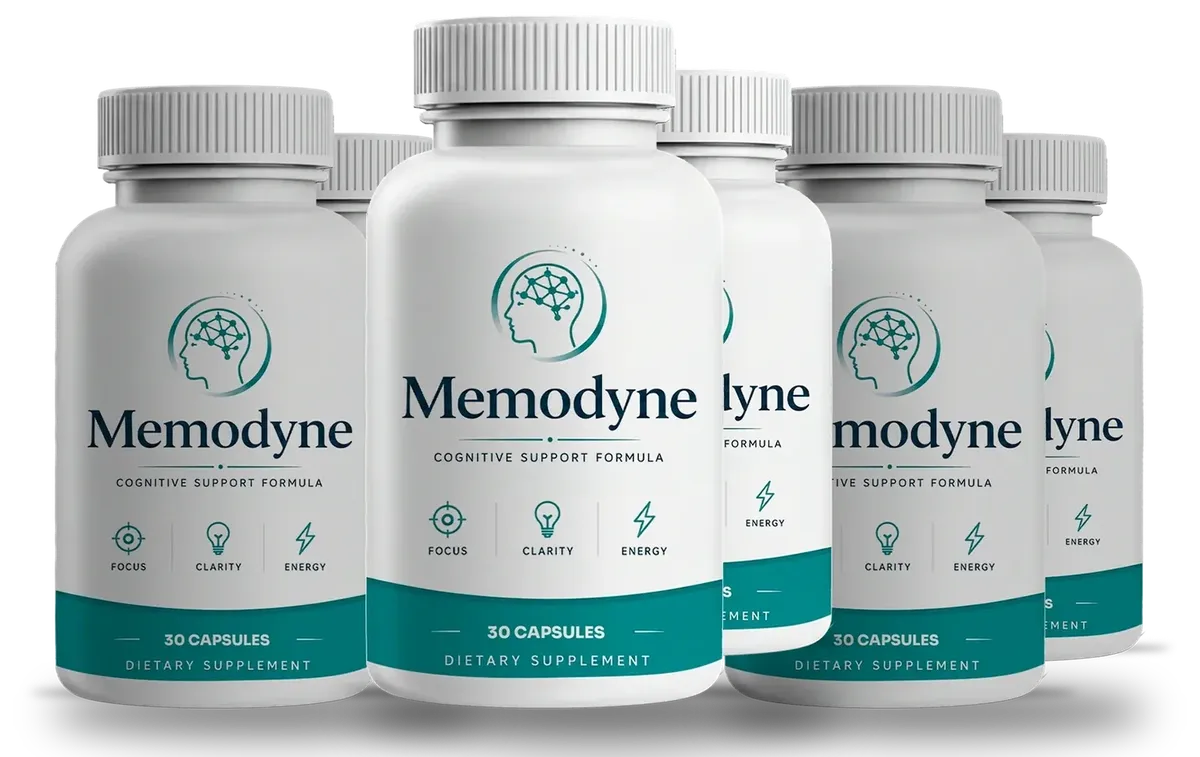
Niacin in Memodyne: Vitamin B3 at 7.5 mg NE Explained
Quick answerNiacin is vitamin B3. Your body uses it to turn food into energy and to keep nerves, skin and digestion working. Each Memodyne capsule lists 7.5 mg NE, about half of the 14 to 16 mg adults need a day. That is well under the 35 mg upper limit and below the range where flushing starts.
- 60-day satisfaction window
- Free US shipping on 3 and 6 bottles
Niacin at a glance
- Where it is named
- Printed with its own amount on the Supplement Facts panel
- Amount per capsule
- 7.5 mg NE
- Doses used in studies
- Adults need 14-16 mg NE a day (NIH ODS, Niacin)
- Share of the studied dose
- About half a day's need
- Also called
- Vitamin B3, 7.5 mg NE
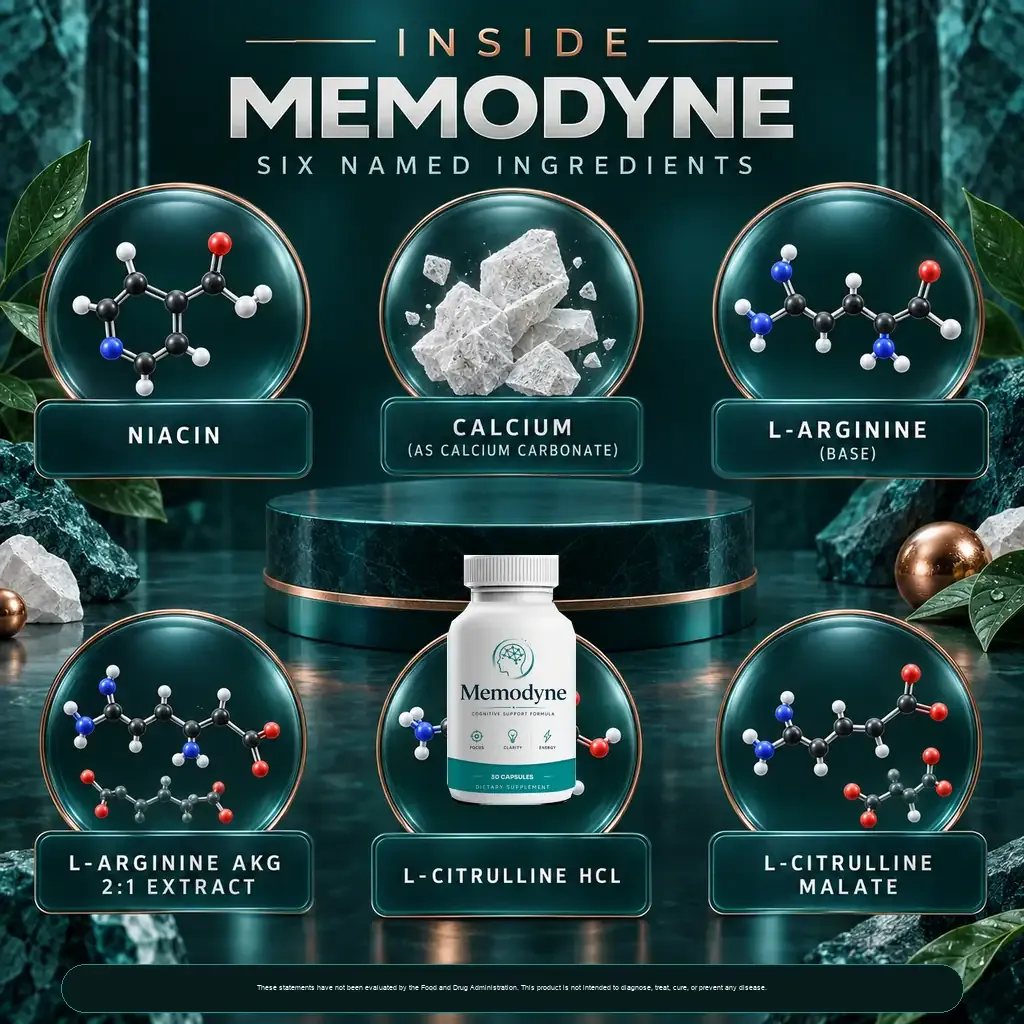
Niacin is the first line on the Memodyne Supplement Facts panel. It is one of only two lines with a Daily Value. The other is calcium at 18 mg. The five amino acid lines have no Daily Value at all.
What is niacin?
Niacin is vitamin B3, one of the eight B vitamins. It dissolves in water, so the body does not store large amounts. You need a fresh supply from food most days.
Inside your cells, niacin becomes a helper molecule called NAD. NAD takes part in hundreds of chemical reactions. Many of them turn the carbs, fats and protein you eat into energy your cells can use.
Niacin also helps keep skin, nerves and the digestive tract healthy (NIH ODS, Niacin). That is why a severe shortage shows up in all three places.
- 7.5 mgniacin NE in each Memodyne capsule
- 47%of the Daily Value, as printed
- 35 mgadult upper limit from supplements
What does 7.5 mg NE mean on the label?
NE stands for niacin equivalents. It is the unit used for niacin from all sources. Your body can make some niacin from tryptophan, an amino acid in protein foods. NE counts both.
The Memodyne label lists 7.5 mg NE and prints 47% DV. The Daily Value for niacin is 16 mg, so the math checks out. The label does not say whether the form is nicotinic acid or niacinamide.
| Group | Daily need (mg NE) | What one Memodyne capsule covers | Source |
|---|---|---|---|
| Adult men | 16 mg | About 47% | (NIH ODS, Niacin) |
| Adult women | 14 mg | About 54% | (NIH ODS, Niacin) |
| Pregnancy | 18 mg | About 42%; the label says to ask a physician first | (NIH ODS, Niacin) |
| Nursing | 17 mg | About 44%; the label says to ask a physician first | (NIH ODS, Niacin) |
| Upper limit (adults) | 35 mg from supplements | 7.5 mg is about a fifth of it | (NIH ODS, Niacin) |
Is niacin good for the brain?
Your brain needs niacin, just like your muscles and skin do. A severe shortage, called pellagra, causes skin rash, diarrhea and confusion. In the past, it also caused memory problems and even dementia. Pellagra is now rare in the US because many foods are fortified.
The key point is what happens when you already get enough. Topping up a vitamin you are not short of has not been shown to sharpen memory. Our sources do not show that extra niacin helps memory in healthy adults.
Honest note: what the niacin line can and cannot do
The niacin in Memodyne covers about half a day's need. That is a real, measurable amount, in contrast to the small amino acid doses. If your diet is low in niacin, it helps fill the gap, as any B vitamin pill would.
It is not a memory treatment, and no study of Memodyne has been published. The front-label ENERGY icon is marketing. Niacin's role in energy use is about cell chemistry, not a feeling of more pep. See our benefits page for each label word side by side with the evidence.
Does niacin cause flushing?
It can, at higher doses of one form. The NIH says 30 mg or more of nicotinic acid can make the skin turn red, burn, tingle or itch (NIH ODS, Niacin). It often hits the face, arms and chest, and it fades on its own.
The Memodyne label lists 7.5 mg NE. That is well below the range where flushing is reported, so it is unlikely here.
- 7.5 mg NE
One Memodyne capsule. About half a day's need. Flushing unlikely.
- 14 to 16 mg NE
What adults need each day from all sources, mostly food.
- 30 mg nicotinic acid
Around where flushing starts to be reported.
- 35 mg
The upper limit for adults from supplements and fortified foods.
- Hundreds of mg or more
Prescription doses once used for cholesterol, only under a doctor's care.
Where does niacin come from in food?
Most people in the US get enough niacin from what they eat. It is found in both animal and plant foods. Many breads and cereals also have niacin added.
Poultry and fish
Chicken breast, turkey, tuna and salmon are some of the richest sources.
Meat
Beef, pork and liver supply niacin, plus tryptophan the body can turn into more.
Plant foods
Peanuts, brown rice, beans, potatoes and fortified cereals add niacin to a meatless diet.
A plate with a palm-sized portion of chicken or fish often covers a large share of a day's need. That is a good reminder that food does most of the work.
How do you know if you get enough niacin?
For most adults, a normal mixed diet covers it. A true shortage is rare in the US and usually comes with other problems, such as heavy drinking, very poor appetite or a condition that blocks how food is absorbed.
If you eat little protein, drink a lot of alcohol or have lost weight without trying, mention it at your next checkup. Your doctor can look at your diet and your other B vitamins as a group. Low vitamin B12, not niacin, is the B vitamin most often checked when an older adult has memory complaints, and it is easy to test.
Who should watch their total niacin?
At 7.5 mg NE, the niacin in Memodyne is unlikely to cause trouble on its own. The thing to watch is stacking. Many people take a multivitamin, a B-complex or an energy drink with added niacin.
A quick niacin check
- Add up the niacin on every supplement label you take each day
- Some B-complex pills hold more niacin than the 35 mg upper limit on their own
- Ask your doctor before high-dose niacin if you have liver disease, gout, diabetes or stomach ulcers
- Tell your doctor if you take prescription niacin or a cholesterol medicine
- Pregnant or nursing? The label says to ask a physician first
The amino acid lines need more care than the niacin line does. Arginine and citrulline may lower blood pressure and add to blood pressure drugs (Mayo Clinic, L-arginine). Our side effects page and L-arginine page cover that in detail.
How does niacin compare with the rest of Memodyne?
Niacin is the only line that reaches a large share of a known daily target. The amino acids are listed at small fractions of the doses used in studies. For example, beta-alanine is about 1% of a sports dose. L-citrulline is a small fraction of trial amounts too.
So if you are asking what in the capsule reaches a meaningful amount, the honest answer is the niacin. The full comparison is on our ingredients page.
Niacin FAQ: questions people ask
What does niacin do in the body?
Niacin helps your cells turn food into usable energy. It is also needed for healthy skin, nerves and digestion.
Is niacin good for the brain?
Your brain needs niacin like the rest of the body, and a severe shortage can cause confusion. Extra niacin has not been shown to help memory in people who already get enough.
How much niacin is in Memodyne?
The label lists 7.5 mg NE per capsule, which it prints as 47% of the Daily Value. One capsule a day gives 7.5 mg NE.
Will the niacin in Memodyne make me flush?
It is unlikely. Flushing is linked to 30 mg or more of nicotinic acid, and the label lists 7.5 mg NE.
What does NE mean on a label?
NE stands for niacin equivalents. It counts niacin from all sources, including what your body makes from the amino acid tryptophan.
How much niacin do adults need a day?
Adult men need 16 mg NE and adult women need 14 mg NE a day. Pregnancy and nursing raise the need a little.
What is the upper limit for niacin?
For adults, the upper limit is 35 mg a day from supplements and fortified foods. Niacin that occurs naturally in food does not count toward it.
Can I take Memodyne with a multivitamin?
Usually yes for niacin, but add up the niacin on every label you take. If the total from pills goes above 35 mg, ask your doctor or pharmacist.
What foods are high in niacin?
Chicken, turkey, fish, beef, pork, peanuts, brown rice and fortified breakfast cereals are good sources. Most people in the US get enough from food.
Is niacin the same as niacinamide?
They are two forms of vitamin B3. Nicotinic acid can cause flushing at higher doses, while niacinamide usually does not. The label does not say which form it uses.
Ready to try Memodyne?
One capsule a day, 30 per bottle, from $49 a bottle on the 6-bottle pack, with a 60-day money-back window shown on the sales page. Take blood pressure or heart medicine? Ask your doctor first.