Do Memory Supplements Work? 5 Questions to Ask Before You Buy
Quick answerHealth agencies say direct evidence that supplements prevent Alzheimer's disease or other dementias is lacking. A few single ingredients have small studies, often at doses far above one capsule. Ask five questions before you buy: what is claimed, what was tested, at what dose, in whom, and who stands behind it. Memodyne has no product study.

What are the key facts about memory supplements and evidence?
Key facts
- Direct evidence that supplements prevent Alzheimer's disease or other dementias is lacking (NCCIH, Supplements for cognitive function).
- The one arginine memory trial we found was small and short: 72 frail older adults with high blood pressure, 3.3 g a day for 4 weeks, single-blind.
- One Memodyne capsule lists 400 mg of arginine, about 12% of that trial dose.
- No study of Memodyne itself has been published, and no review shows its amino acids help memory in healthy people.
- Habits have better support: sleep, activity, blood pressure control, hearing care and time with other people.
- Mayo Clinic is cited here only for L-arginine cautions. We do not claim it reviewed memory pills in general.
What does “work” mean for a memory supplement?
The word hides three different questions. Can a supplement prevent memory loss? Can it sharpen memory in a healthy adult? Can it treat a disease? Each question needs its own kind of proof, and a product that answers one has not answered the others.
For the first, health agencies say direct evidence is lacking (NCCIH, Supplements for cognitive function). For the second, we found one small trial of a single ingredient, and nothing on a finished capsule like Memodyne. For the third, no supplement is a treatment, and the FDA approves none of them before sale (FDA, Q&A on Dietary Supplements).
So the honest answer to “do memory supplements work?” is “unproven”, not “no” and not “yes”. The five questions below help you judge any bottle.
What are the 5 questions to ask?
- 01
What is claimed?
Read the exact words on the bottle and the sales page.
- 02
What was tested?
A single ingredient, or the finished product?
- 03
At what dose?
Compare the label with the study.
- 04
In whom?
Healthy adults, or a different group?
- 05
Who stands behind it?
A study, a regulator, or only the seller?
What exactly does the seller claim?
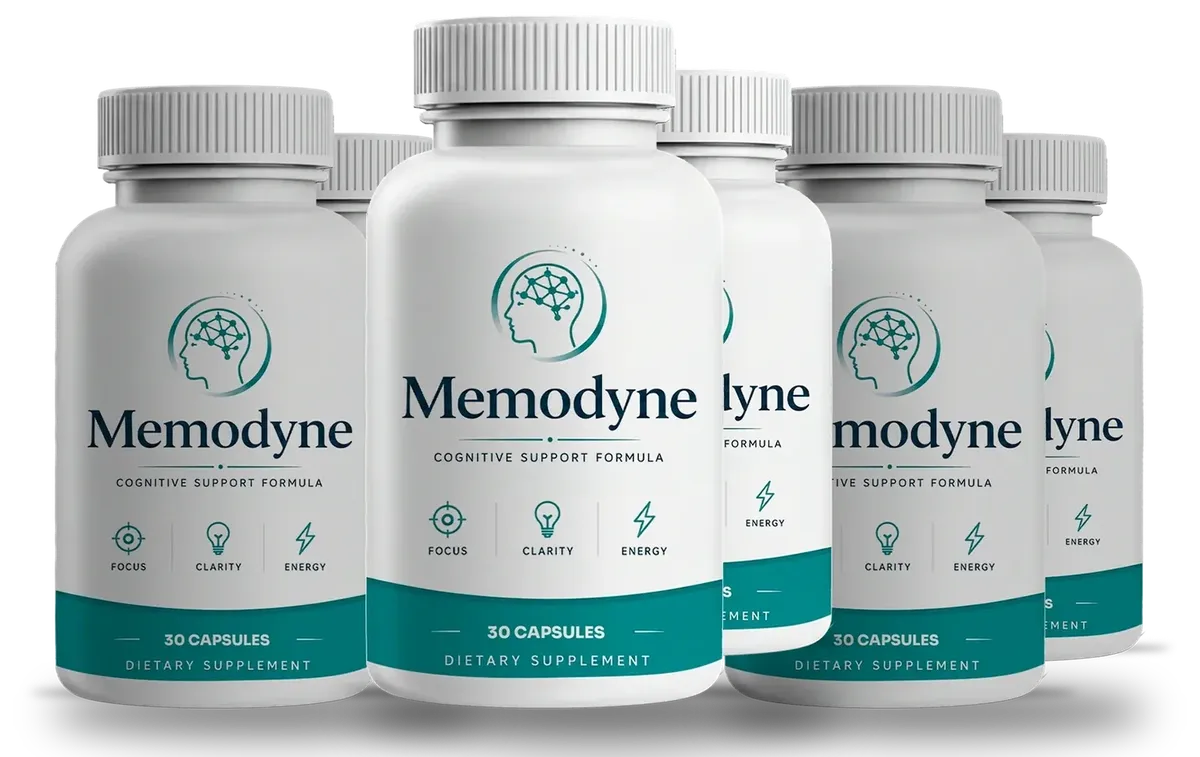
Memodyne's front label reads “Cognitive Support Formula*” with focus, clarity and energy icons. The asterisk leads to a printed statement: these statements have not been evaluated by the Food and Drug Administration, and the product is not intended to diagnose, treat, cure or prevent any disease.
The sales page goes further. It lists supports such as enhancing memory function and protecting the brain from oxidative stress. We found no study of the product behind those lines. Treat the label statement as the legal position and the sales words as marketing.
What was actually tested?
Studies usually test one ingredient at a set dose. A finished capsule mixes several, in different amounts and salt forms. A result for one does not carry over to the mix. The table lists the studies we rely on, and none tested Memodyne.
| Study | Who | Dose | What it measured |
|---|---|---|---|
| Mone et al., 2022 (Mone et al., 2022) | 72 frail older adults with high blood pressure | 1.66 g of arginine twice a day for 4 weeks | Thinking-test scores differed from placebo |
| Dong et al., 2011 (Dong et al., 2011) | 11 trials, 387 people | 4 to 24 g of arginine a day | Blood pressure about 5 mmHg lower (systolic) |
| Khalaf et al., 2019 (Khalaf et al., 2019) | Review of arginine and citrulline trials | Gram doses | Blood pressure; results mixed |
| Trexler et al., 2015 (Trexler et al., ISSN 2015) | Athletes | 4 to 6 g of beta-alanine a day | Muscle carnosine |
At what dose, and how does the capsule compare?
This is the check most ads skip. One Memodyne capsule lists 400 mg of arginine in two forms. The memory trial used 3.3 g a day. That makes the capsule about 12% of the trial dose, or roughly one eighth. Blood pressure trials used far more still.
Beta-alanine tells the same story. The label lists 40 mg, and sports studies used 4 to 6 g a day, so the capsule holds about 1% of a 4 g dose. Niacin is the exception. At 7.5 mg NE it covers about half of what adults need in a day (NIH ODS, Niacin), but that is a vitamin amount, not a memory dose.
In whom was it tested?
The memory trial enrolled frail older adults who had high blood pressure and thinking problems. It was single-blind, which means the participants did not know their group but the staff did. Those traits limit what it can say about a healthy 45-year-old.
Another trial points the other way. In VINTAGE MI, people took arginine after a heart attack, and the trial found no benefit and more deaths in the arginine group (Schulman et al., JAMA 2006). It used far more arginine than a capsule holds, yet it is a clear reason for people with heart history to ask a cardiologist first.
Ask first
Talk with a doctor before the first capsule if you take blood pressure medicine, nitrates or ED pills, or have had a heart attack. The label also asks pregnant or nursing mothers, anyone under 18 and anyone with a known medical condition to consult a physician.
Who stands behind the claim?
Not the FDA, which does not approve dietary supplements before sale (FDA, Q&A on Dietary Supplements). The FTC expects health claims to rest on sound evidence (FTC, Health Products Compliance Guidance), which puts the burden on the seller. Memodyne has no published customer rating or review on this site. Reviews appear only after each one is matched to a real order.
A money-back guarantee is a purchase policy, not evidence. The sales page shows 60 days from purchase and also asks for at least 30 days of use. Confirm which rule applies by calling the order desk before you rely on either one.
What has better support than a capsule?
Steady sleep, regular activity, controlled blood pressure, good hearing and time with other people. None is a cure. Each supports the brain over the years, and each costs little or nothing. A doctor can also check vitamin B12 and review your medicines, because both can cause forgetfulness that is treatable.
If you still want to try a supplement, keep the habits and the checkups. Treat a capsule as an extra, not a plan.
How can you test one fairly on yourself?
- Keep a short note for a week before you start: sleep, mood, and how often you lose things.
- Take it exactly as the label says, one capsule with 8 oz of water, 20-30 minutes before a meal.
- Add one line to your note every few days. Change nothing else at the same time if you can.
- Check in at day 30 and again before day 60.
- Stop and call a doctor if you feel unwell, and decide inside the guarantee window.
Even a careful log cannot separate the capsule from expectation, a better week or a change in your habits. It only tells you how you feel.
Frequently asked questions
Do memory supplements really work?
Health agencies say direct evidence that supplements prevent dementia is lacking. Some single ingredients have small studies, often at doses far above what a capsule holds.
Are any memory supplements effective?
We found one small, short, single-blind trial of arginine in frail older adults. It does not show that a supplement helps memory in healthy people.
Does Memodyne work?
That has not been shown. No study of Memodyne has been published, and its arginine is about 12% of the dose in the memory trial.
Are brain supplements a scam?
Not by default. Some are honest about what is in the bottle. The risk is in claims that run ahead of the evidence, so read the label and the study behind each claim.
Are brain supplements worth it?
It depends on what you expect. If you want a proven memory treatment, no supplement is that. If you accept the evidence gap and want a simple routine, a clear label and refund window matter most.
Do focus supplements work?
The focus icon on the Memodyne label is marketing, not a test result. We found no data on focus for the product.
Our view
Our view is that “do memory supplements work?” has no clean answer, and a seller who gives you one is guessing. The fair position is that single ingredients show small signals in narrow groups, and finished capsules like Memodyne are untested.
Ask the five questions of every bottle, ours included. Put sleep, activity and a doctor's check first, and spend only what you are comfortable losing if the capsule does nothing for you.
Last updated
Weighing a trial of Memodyne?
Packs of 2, 3 and 6 bottles, and a 60-day guarantee shown on the sales page. Check the refund rule by phone first, and ask your doctor if you take heart or blood pressure medicine.
We earn money when you buy through our links. The price you see at checkout is the one that counts.