Memodyne Fact Check: 7 Sales-Page Claims Against the Label
Quick answerMemodyne is a real, labeled capsule, but its brain claims are untested. We checked seven claims from the front label and the sales page. None has been shown for this product, and the label's own asterisk says the words were not evaluated by the FDA.
What are the key facts about the Memodyne claims?
Key facts
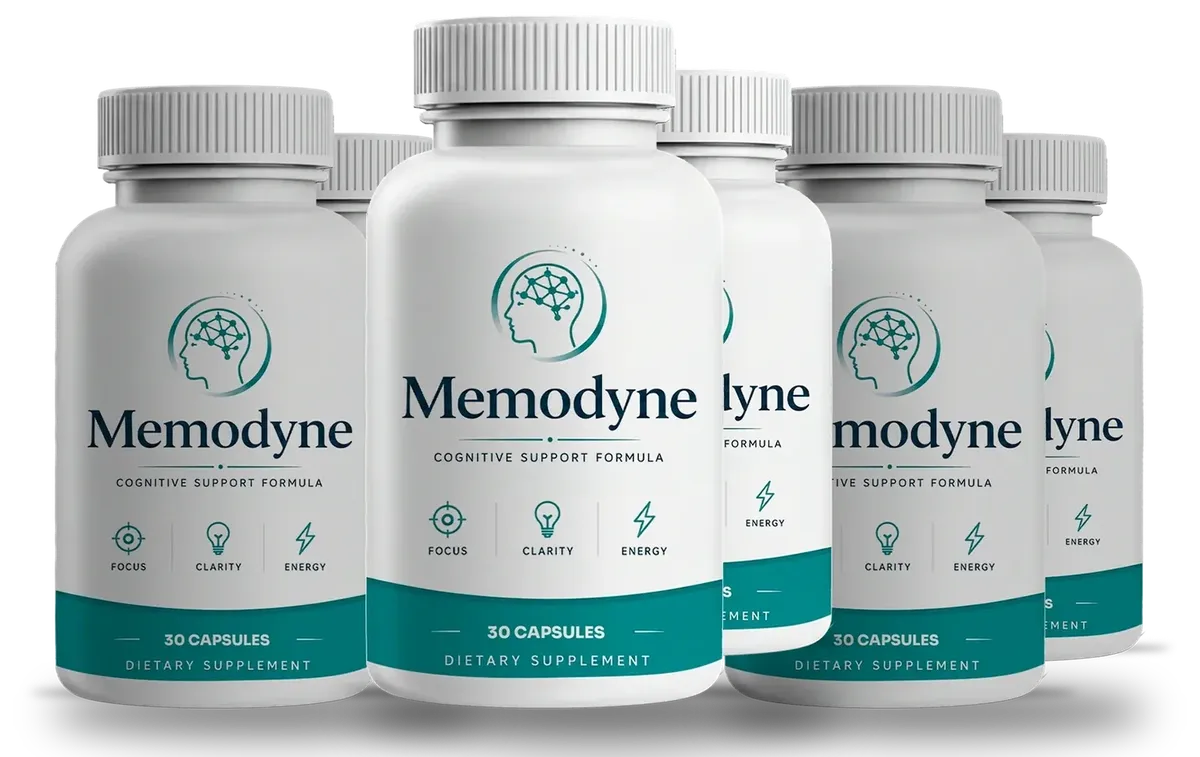
- The front label reads “Cognitive Support Formula*” with focus, clarity and energy icons. The asterisk points to the FDA statement on the same label.
- The sales page adds five support claims about memory, oxidative stress, neural communication, long-term brain health and neurotransmitters.
- Nobody has published a study of Memodyne itself. The one small arginine memory trial used about 8 times more arginine a day than the label lists.
- The label prints seven lines with amounts. That part is easy to verify and it checks out.
- The GMP and FDA-registered seals are brand badges. No facility or certificate number is published.
- Memodyne is not FDA approved, and no supplement is. It is not a treatment for memory loss, dementia or Alzheimer's.
What can a fact check do for a supplement?
It can compare each claim with something you can verify. For a capsule, that means the printed label, the doses used in research and the rules about what a supplement may say. It cannot prove a capsule will help you.
We also use the check to answer a common worry: is this real or fake? The capsule is real, the label is printed and the order path is a working one. The more important question is whether the brain claims hold up. That is what the seven checks test.
What are the 7 claims?
- 01
“Cognitive Support Formula*”
The front-label name for the mix.
- 02
Focus, Clarity, Energy
Three icons on the front label.
- 03
“Enhance memory function and support overall cognitive health”
A sales-page claim.
- 04
“Protect the brain from oxidative stress and improve mental clarity”
A sales-page claim.
- 05
“Boost neural communication and promote better brain performance”
A sales-page claim.
- 06
“Support long-term brain health and improve focus and concentration”
A sales-page claim.
- 07
“Optimize neurotransmitter production and contribute to a sharper, more agile mind”
A sales-page claim.
How does each claim score?
| Claim | Where | Finding | Why |
|---|---|---|---|
| Cognitive Support Formula | Front label | Not shown | One small arginine trial; no trial of the product |
| Focus, clarity, energy | Front-label icons | Not shown | Icons are marketing, not test results |
| Enhance memory function | Sales page | Not shown | No study of the product exists |
| Protect the brain from oxidative stress | Sales page | Not shown | No evidence for this capsule |
| Boost neural communication | Sales page | Not shown | No evidence for this capsule |
| Long-term brain health, focus and concentration | Sales page | Not shown | No product data; long-term use has not been studied |
| Optimize neurotransmitter production | Sales page | Not shown | No evidence for this capsule |
“Not shown” does not mean “false”. It means we found nothing that supports the claim for this product. A claim can be true and still be unproven.
What does the front label really say?
Three words, three icons and an asterisk. “Cognitive Support Formula*” is a name. The icons for focus, clarity and energy are drawings. The asterisk leads to the standard FDA statement printed on the bottle: “These statements have not been evaluated by the Food and Drug Administration. This product is not intended to diagnose, treat, cure, or prevent any disease.”
So the label itself tells you not to treat the front words as tested. That is the maker's own caution, and it is a fair one. Niacin helps cells use food for energy, but that is a different thing from feeling more alert.
What does the research say about the sales-page claims?
We looked for human studies behind each phrase. For memory, the closest is one small trial. It enrolled 72 frail older adults with high blood pressure, who took 3.3 g of arginine a day for four weeks. Their thinking-test scores differed from placebo (Mone et al., 2022). A federal health agency says direct evidence that supplements prevent dementia is lacking (NCCIH, Supplements for cognitive function).
For oxidative stress, neural communication and neurotransmitters, we found no study of this capsule at all. The ingredients are better known for blood flow and workouts. Arginine is used by the body to make nitric oxide, and citrulline is turned into arginine (Schwedhelm et al., 2008). Blood pressure trials used gram doses (Dong et al., 2011).
The capsule holds 400 mg of arginine, which is about 12% of the memory-trial dose. Beta-alanine is 40 mg, about 1% of the 4 g low end in sports studies (Trexler et al., ISSN 2015). Calcium is 18 mg, under 2% of a day's need (NIH ODS, Calcium). Only the niacin, at about half a day's need, comes close to a full dose (NIH ODS, Niacin).
What may a supplement claim?
In the United States, the FDA does not approve dietary supplements before they are sold. Companies must list each ingredient with its amount per serving (21 CFR 101.36). Health claims in ads must also rest on sound evidence (FTC, Health Products Compliance Guidance).
That is why the label carries the asterisk and the disclaimer. It is also why you should hold bigger promises on any sales page to a higher standard. A claim in a headline is not a finding.
Which claims do hold up?
Statements you can verify on the label
- Every one of the seven lines has its own printed amount.
- It is a once-a-day capsule, and each bottle holds 30.
- The capsule shell is made of hypromellose, which is plant-based.
- Niacin at 7.5 mg NE covers about half of a day's need.
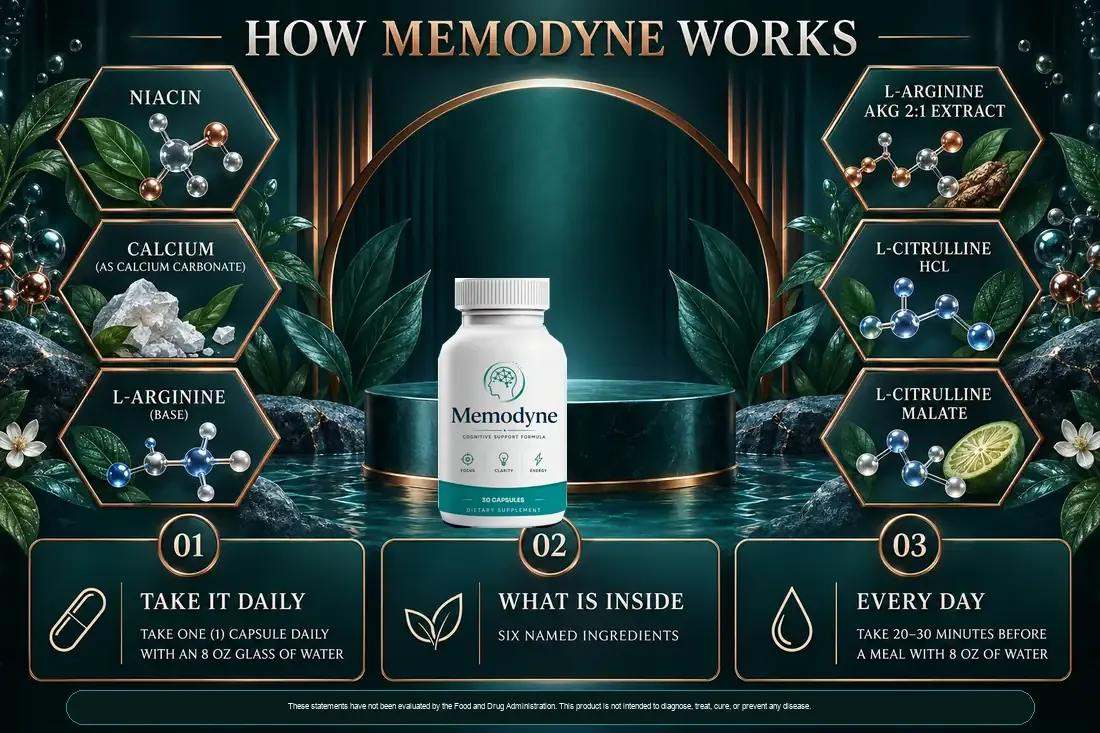
- The directions say one capsule with 8 oz of water, 20-30 minutes before a meal.
These are plain facts. They do not say the capsule helps your memory. They say the label is open, and that is worth something.
Are the seals proof of quality?
They are brand badges. The GMP badge refers to the FDA's manufacturing rules, yet no facility name or certificate number is published. The FDA-registered facility badge points to a listing, which is not approval of the product. Our testing and quality page explains each seal.
A lab certificate for a batch would show what is in the bottle. A reference number exists in our files, but no certificate we can read has been published.
What should you do before you rely on any claim?
Ask your doctor. Arginine and citrulline may lower blood pressure and may add to blood pressure pills, nitrates and ED pills (Mayo Clinic, L-arginine). If forgetfulness is new, sudden or getting in the way of daily life, see a doctor. Some causes, like low vitamin B12 or a medicine side effect, can be treated (NIA, Memory problems and aging).
Stroke signs need 911
Sudden confusion, trouble speaking, face drooping or numbness on one side can be a stroke. Call 911 and write down when it began (CDC, Stroke signs).
Frequently asked questions
Is Memodyne real or fake?
The capsule is real, and its label prints seven lines with amounts and names a distributor. The brain claims on the label and sales page have not been tested.
Does Memodyne really boost neural communication?
We found no evidence for that claim in this capsule. Memodyne has not been tested in a published trial.
Does Memodyne protect the brain from oxidative stress?
That claim is not shown for this product. We found no study that tested it.
What does the asterisk on the Memodyne label mean?
It points to the FDA statement on the bottle. The front-label words have not been evaluated by the FDA.
Are the GMP and FDA-registered seals proof of quality?
They are brand badges. No facility name or certificate number is published, and a facility listing is not FDA approval.
Is there any research on the ingredients?
Yes, on the single ingredients, mostly at gram doses. One small arginine memory trial used about 8 times more arginine a day than the label lists.
Our view
Our view is that the label is honest about its amounts and careful about its words, and the sales page goes further than the evidence. Each of the seven claims is untested for this product.
That does not make Memodyne a fraud. It makes it an unproven supplement with a clear label and a refund window. Read the claims as hopes, not findings, and judge the capsule by your own results and your doctor's advice.
Last updated
Fact-checked the claims? Then see the label and the packs
The label prints every amount, and the sales page shows a 60-day money-back window. Judge the capsule on your own results, and speak to your doctor first if you take blood pressure or heart medicine.
We earn money when you buy through our links. The price you see at checkout is the one that counts.