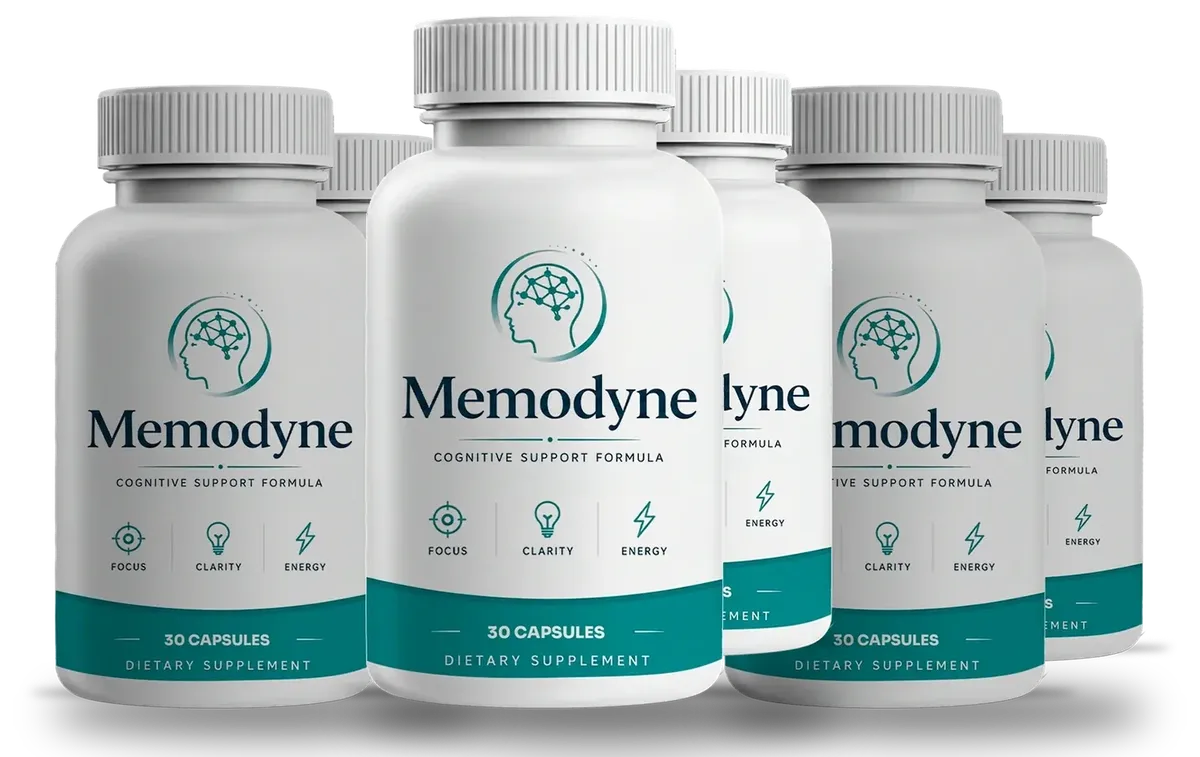
How Long Does Memodyne Take to Work, and Does It Really Work? 5 Checks on Timing Claims
Quick answerNo one can say how long Memodyne takes to work, or whether it will. Nobody has published a trial of the capsule, so every timeline you read is a guess. Test each timing claim with five checks: was the product tested, at the label dose, in people like you, against a placebo, and for how long?

What are the key facts about Memodyne timing claims?
Key facts
- Without a published trial of the capsule, there is no measured result and no measured timeline.
- The label calls it a Cognitive Support Formula. The asterisk points to the FDA statement that these words were not evaluated by the FDA.
- Study lengths on record belong to single ingredients: 4 weeks for the memory trial, at least 2 weeks for beta-alanine in sports and 6 months for an arginine trial after heart attacks.
- One capsule lists about 12% of the arginine used in the memory trial and about 1% of a 4 g beta-alanine dose.
- The sales page shows a 60-day money-back window and asks for at least 30 days of use before a refund. The FAQ on that page describes the guarantee as unconditional.
- Memodyne is not FDA approved, and no supplement is. Ask a doctor first if you take blood pressure medicine, nitrates or ED pills.
Why are timing claims so easy to believe?
A date makes a promise feel real. “You will notice a change within days” sounds like a fact, because it names a clock. But a clock needs a measurement behind it. Without one, it is just a sentence.
Memodyne draws a lot of these sentences. Ads, forums and review pages all try to answer the question people type most: how long until it works? The honest answer starts with a gap: a published trial of the capsule is missing.
So instead of a date, here is a tool. Five checks sort a fair claim from a guess, and they work on any supplement.
What are the 5 checks on a timing claim?
- 01
Was the product tested?
The capsule itself, not a cousin.
- 02
Was the label dose used?
Compare the amounts.
- 03
Were the people like you?
Age, health and medicines matter.
- 04
Was there a comparison group?
A placebo shows what would happen anyway.
- 05
What was measured, and when?
A named test at a named time.
Was Memodyne itself tested?
No. We searched, and we found no published trial of the capsule. That one fact answers the question for every claim that follows. A time to results needs a study of results, and there is none.
The research that does exist covers arginine, citrulline and beta-alanine on their own. It is useful background. It is not a clock for this product.
If a page quotes a number of days or weeks, ask where the number came from. A real answer names a study and a group of people. A vague one says “users report”.
Does the study dose match the label dose?
This is where claims often fall apart. A study that found something at a large dose says little about a small one.
| Ingredient | One capsule lists | Research used | Share |
|---|---|---|---|
| L-Arginine | 400 mg in two forms | 3.3 g a day in the memory trial | About 12% |
| Beta-alanine | 40 mg | 4 g a day, the low end in sports studies | About 1% |
| L-Citrulline | 200 mg in two forms | Gram doses in blood pressure trials | A small fraction |
A smaller amount might do less, the same or nothing. We cannot tell, and neither can a page that quotes a timeline from a larger-dose study.
Were the people in the study like you?
The one arginine memory trial we found enrolled 72 frail older adults with high blood pressure and thinking problems (Mone et al., 2022). Most readers are not that group. Their blood vessels, their medicines and their baseline are different.
Beta-alanine studies followed athletes in hard training (Trexler et al., ISSN 2015). The citrulline finding on blood arginine came from healthy volunteers (Schwedhelm et al., 2008). Each group answers a different question.
When a claim says “people feel sharper”, ask which people. A claim without a group is a story without a setting.
Was there a comparison group?
People feel different after they start something new, even when the something is a dummy. Attention goes up, sleep may improve and mood lifts. Researchers use a placebo group to subtract all of that.
The memory trial had a placebo group, but it was single-blind, which means the testers knew who got what. Such a design can nudge results. We call it a signal, not strong proof.
Why this matters to a timeline
Without a comparison group, a change at week three could be the capsule, a better night’s sleep, a quiet month at work or a new habit. A timeline built that way proves nothing.
What was measured, and over what time?
A fair claim names a test and a time. “Thinking-test scores after 4 weeks” is a claim. “Feel more alive soon” is not.
| Study | Length | What was measured |
|---|---|---|
| Arginine memory trial | 4 weeks | Thinking-test scores in 72 frail older adults |
| Beta-alanine position stand | At least 2 weeks | Muscle carnosine in athletes |
| Arginine AKG in trained men | 8 weeks | Strength and power measures |
| Arginine after a heart attack | 6 months | Heart and artery outcomes; no benefit |
Those lengths describe how long researchers watched. They do not tell you when a person would notice a change, if ever.
So does Memodyne really work?
The fair answer is that no one knows. The label sells it as a Cognitive Support Formula, and the front-label icons say Focus, Clarity and Energy. Those are marketing words. The FDA did not evaluate them.
NCCIH, a US health agency, notes that direct proof of supplements preventing dementia is lacking (NCCIH, Supplements for cognitive function). And the habits with stronger backing are free: sleep, activity, blood pressure control, hearing care and time with friends.
How can you test it fairly yourself?
If you decide to try it, treat the 60-day window as an experiment you run on yourself. Keep everything else steady, take the capsule the way the label says and write short notes.
- Before day 1
Show the label to your doctor or pharmacist if you take any medicine. Write down how sleep, focus and mood feel.
- Days 1 to 14
Note any dizziness, headache or stomach upset.
- Day 30
Read your notes back. Be honest about other changes in your life.
- Day 45
Decide whether to continue. Call the order desk while there is time in the window.
- Day 60
The window ends, counted from the purchase date.
The sales page asks for at least 30 days of use before a refund, but its FAQ calls the guarantee unconditional. Ask the order desk at +1 (302) 200-3480 which rule applies, and write down the answer.
When should you stop and call a doctor?
If dizziness, faintness or a general unwell feeling shows up, stop and phone your doctor. Arginine and citrulline may lower blood pressure, and the effect may add to blood pressure drugs, nitrates and ED pills (Mayo Clinic, L-arginine). You never need to finish the bottle.
Memory trouble that gets in the way of daily life needs a doctor, since some causes can be treated (NIA, Memory problems and aging). Sudden confusion or trouble speaking may be a stroke, so dial 911.
Frequently asked questions
What is the wait before Memodyne starts to work?
No one can say. No trial of the capsule has been published, so there is no measured timeline.
Does Memodyne really work?
That is unknown. The ingredients have research behind other uses, but the capsule has not been tested for memory.
Will I notice anything after the first week?
We cannot promise it. The amounts are small next to study doses, and no study looked at this product.
How many days of use make a fair trial?
Plan around the 60-day window on the sales page, with a check at day 30 and a decision by about day 45.
Is a longer study a sign that Memodyne takes longer to work?
No. A study length shows how long researchers watched. It does not tell you when a person might notice a change.
What if I notice nothing after 60 days?
That is a valid result. Call the order desk inside the window to ask about the refund rule.
Our view
Our view: the honest timeline for Memodyne is a blank. We would rather print that than a number we cannot support.
What you can control is the test. Use the same time each day, keep notes, stay alert to side effects and decide with time to spare in the window. That is a fair way to learn something about your own body.
Last updated
Ready to run a fair 60-day test?
Order through the brand sales page, save the order email and mark day 60 on your calendar. See your doctor before the first capsule if you take blood pressure or heart medicine.
We earn money when you buy through our links. The price you see at checkout is the one that counts.